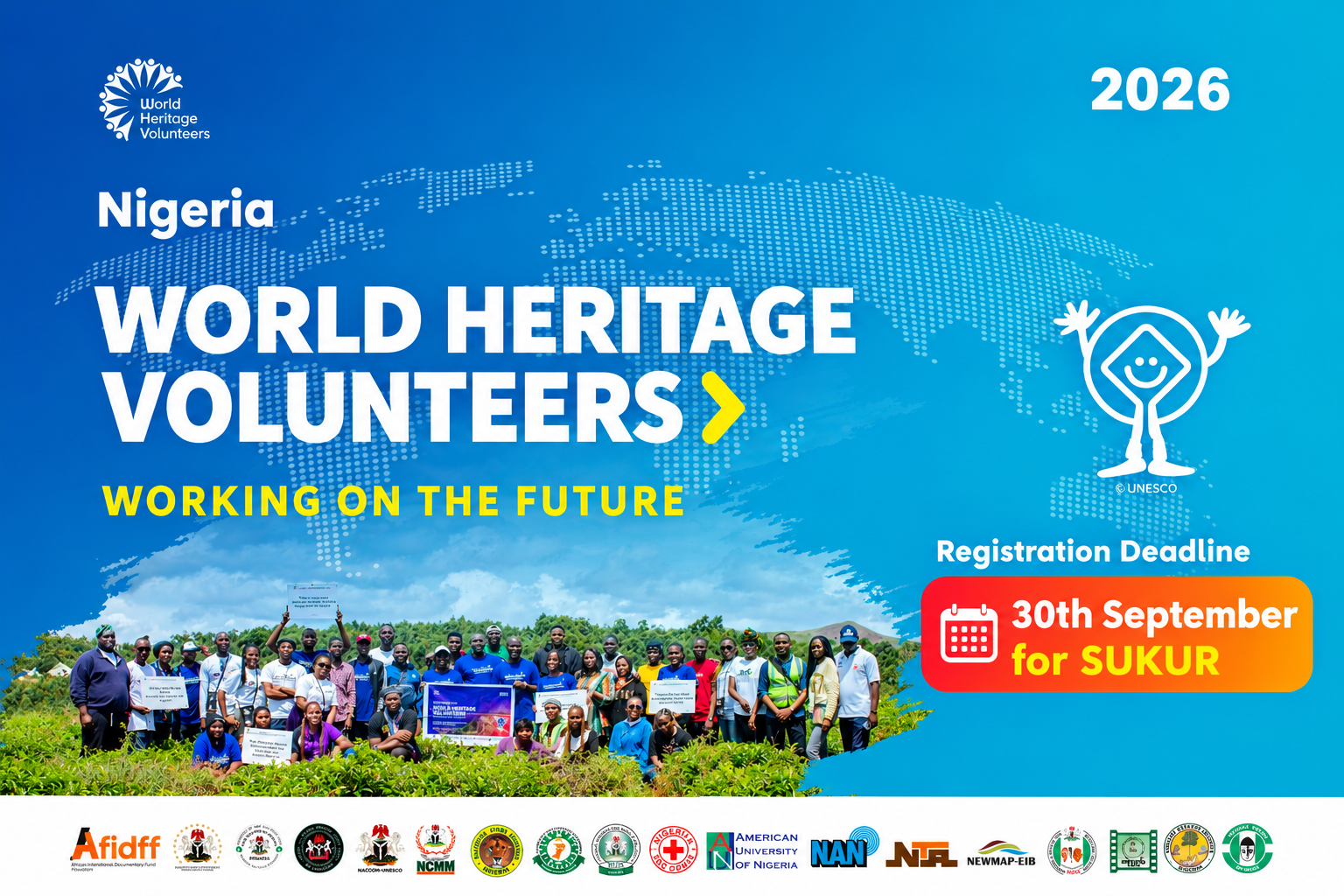
The African International Documentary Festival Foundation (AFIDFF) and its partners invite young people, heritage enthusiasts, environmental advocates, cultural ambassadors, creatives, students, researchers, and global changemakers to participate in the 2026 UNESCO World Heritage Volunteers (WHV) Action Camp at Sukur Cultural Landscape, Adamawa State, Nigeria.
The 2026 Action Camp will take place from 6th to 17th November 2026 under the theme: “Sukur’s Living Heritage: Climate Action, Culture, and Sustainable Futures.” This year's Action Camp builds on previous WHV activities at Sukur and focuses on strengthening community-led conservation, environmental stewardship, climate resilience, preventive conservation, and the safeguarding of living heritage.
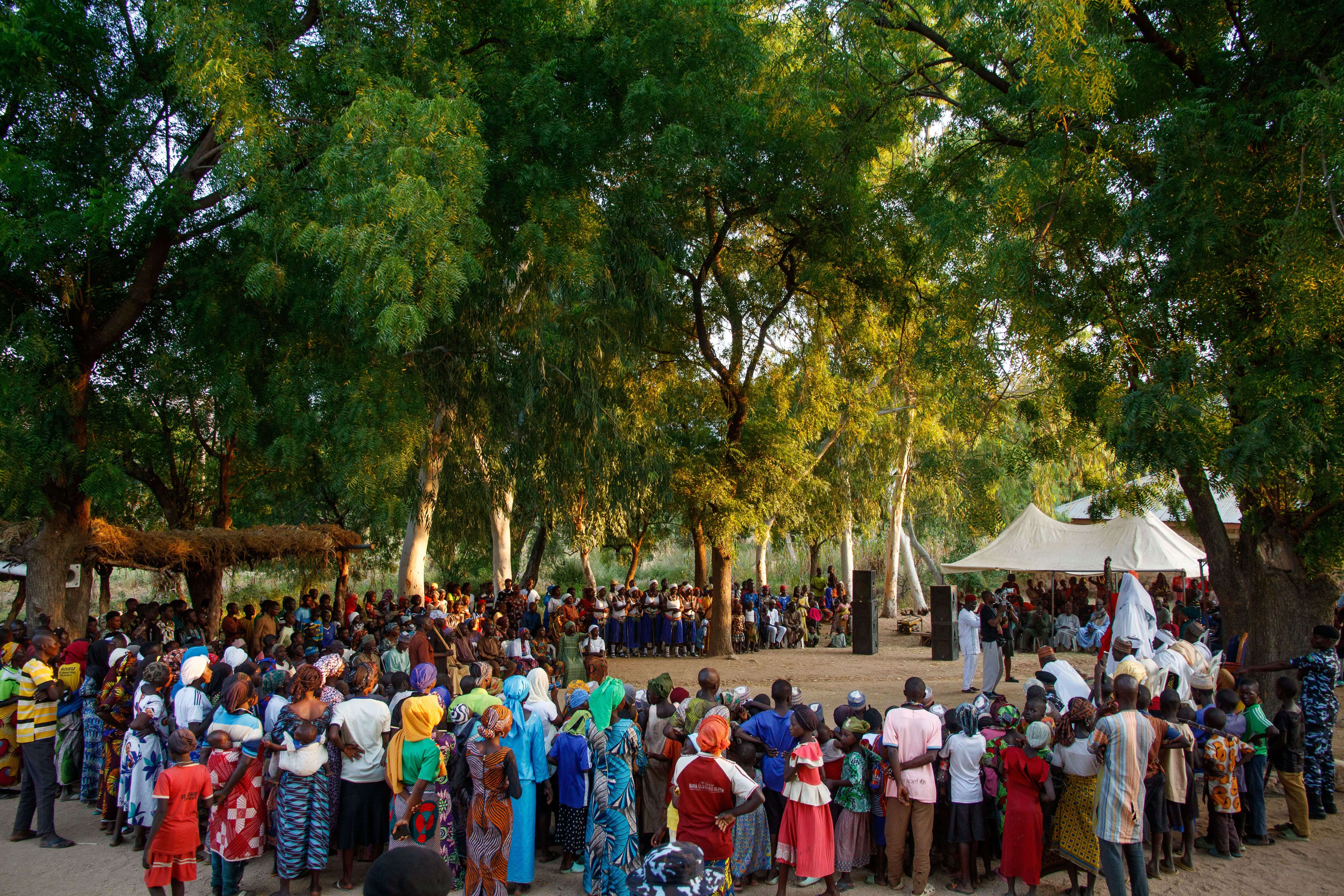
Volunteers will work alongside community members, traditional authorities, heritage professionals, environmental experts, institutions, and other stakeholders to support practical conservation activities while learning about Sukur's unique cultural traditions, indigenous knowledge, architecture, crafts, landscape, and relationship with the environment. Through hands-on activities, documentation, storytelling, dialogue, and cultural exchange, participants will contribute to efforts to safeguard Sukur's heritage while exploring how cultural heritage can support climate action, sustainable livelihoods, community resilience, and future generations.
THE PROJECT
About the Sukur Cultural Heritage Project
The Sukur Cultural Landscape is a UNESCO World Heritage property inscribed on the World Heritage List in 1999. It is located in Madagali Local Government Area of Adamawa State, along the Nigeria-Cameroon border. The landscape includes the Palace of the Hidi (Chief) situated on a hill above the surrounding villages, terraced agricultural fields, sacred symbols, traditional settlement patterns, and the remains of a once-flourishing iron industry. Together, these elements provide an exceptional expression of Sukur's spiritual, material, agricultural, architectural, and social traditions. UNESCO describes the landscape as a remarkably intact physical expression of a society and its spiritual and material culture.
The program seeks to raise awareness and enhance youth involvement both locally and globally in implementing the 1972 Convention on the Protection of the World Cultural and Natural Heritage. The 2026 WHV Action Camp builds on previous interventions at Sukur, with a renewed focus on community-led conservation, climate resilience, environmental stewardship, preventive conservation, traditional knowledge, and sustainable livelihoods. Sukur is Africa’s first cultural landscape to receive a World Heritage List inscription.
This year's campaign is being implemented through 87 Action Camp projects at 82 World Heritage properties and sites on the Tentative Lists, by 69 organizations in 37 countries from April to December 2026. The initiative will provide national and international volunteers with opportunities to work alongside local communities and site managers through hands-on conservation, awareness-raising, education, and intercultural activities.
Project Goal
The Action Camp will seek to:
-
Promote environmental stewardship and climate resilience.
-
Strengthen preventive conservation of heritage structures and landscapes.
-
Promote sustainable land-use practices and climate-smart skills.
-
Support restoration and maintenance activities.
-
Strengthen documentation and record-keeping related to heritage conservation.
-
Create livelihood opportunities linked to heritage protection.
-
Document Sukur's living heritage, traditional knowledge, and cultural practices.
-
Use storytelling and media to increase awareness of Sukur's heritage and climate action.
-
Promote intergenerational learning and knowledge transfer.
-
Strengthen collaboration among communities, traditional authorities, heritage institutions, environmental agencies, academic institutions, and other partners.
-
Support continued advocacy for the protection and sustainable development of Sukur Cultural Landscape.
Project Activities
The 2026 Action Camp will combine practical conservation, environmental activities, heritage documentation, community engagement, cultural exchange, and media outreach. Volunteers will participate in heritage storytelling and documentation, dialogue with traditional authorities and institutional stakeholders, preventive maintenance of vernacular structures, and the documentation and revival of traditional crafts and indigenous knowledge. Activities will also include the maintenance of terraces and pathways, tree planting, composting, soil conservation and other climate-smart practices, as well as environmental awareness and climate resilience sessions.
The programme will further support community engagement and knowledge-sharing, including activities that contribute to the continuation of the Sukur Landscape Community Carbon Market Initiative. Volunteers will explore Sukur’s vernacular architecture, with particular attention to termite-resistant circular huts, while working with local guilds to support traditional ironworks and crafts. Workshops will also focus on sustainable development, eco-friendly agriculture, literacy and small-scale entrepreneurship.
About the Sukur Cultural Landscape, Nigeria: Cultural property inscribed on the World Heritage List (1999)
Sukur is located in Madagali local government area of Adamawa State of Nigeria along Nigeria/ Cameroon border, some 290 km from Yola, the Adamawa State capital of north-eastern Nigeria. It is a hilltop settlement which stands at an elevation of 1045 m. The total land area covered by the site is 1942.50 ha, with the core zone having 764.40 ha and the buffer zone 1178.10 ha, respectively. Sukur is an ancient settlement with a recorded history of iron smelting technology, flourishing trade, and strong political institutions dating back to the 16th century.
The landscape is characterized by terraces on the farmlands, dry stone structures and stone paved walkways. The terraced landscape at Sukur with its hierarchical structure and combination of intensive and extensive farming is remarkable. In addition, it has certain exceptional features that are not to be found elsewhere, notably the use of paved tracks and the spiritual content of the terraces, with their ritual features such as sacred trees.
Volunteer Benefits
Participating in the Sukur WHV Action Camp provides volunteers with an opportunity to gain practical experience while contributing to the safeguarding of one of Nigeria's most important cultural heritage sites.
Volunteer Role
-
Preservation Activities: Engaging in hands-on tasks such as maintaining and restoring dry-stone walls, wood structures, straw roofs, and mountain trails to preserve the traditional architecture and landscape of Sukur.
-
Cultural Heritage Education: Learning and applying traditional techniques in producing iron tools, crafting artisanal handcrafts, and creating items like baskets, pottery, and calabashes.
-
Awareness-Raising: Organizing and participating in activities to raise awareness about the importance of cultural heritage preservation, including hiking, musical evenings, and performing arts.
-
Community Engagement: Collaborating with local communities to strengthen the cultural bonds and enhance the understanding and appreciation of Sukur's heritage.
-
Documentation and Promotion: Assisting in the production of a documentary and that highlights the activities performed during the initiative and promotes the Sukur Cultural Landscape.
-
Innovation and Education: Contributing to innovative projects and educational workshops aimed at fostering resilience and sustainability within the community
-
Participate in environmental and climate-smart activities. ( Sukur Landscape Community Carbon Market Initiative).
Volunteer Benefits:
-
Receive a certificate recognizing your participation in the Action Camp.
-
Cultural Immersion: Volunteers get the unique opportunity to immerse themselves in the rich cultural heritage of the Sukur people, gaining a deeper understanding and appreciation of their traditions and history.
-
Meeting with the Hidi (Chief-in-Council) of Sukur Kingdom, the coveted throne that has been sustained for over 600 years
-
Connect with experts, scholars, government officials, development partners, and fellow youth leaders from around the world.
-
Hands-On Experience: Engaging in preservation activities provides practical experience in traditional architecture, craftsmanship, and cultural heritage conservation techniques.
-
Skill Development: Participants can develop and enhance a range of skills, including project management, teamwork, leadership, and specific technical skills related to restoration and conservation.
-
Community Engagement: Working closely with local communities fosters meaningful connections and cultural exchange, promoting mutual respect and understanding.
-
Access to the Ancient Shrines and other anthropologically sensitive sites of history in the Sukur Kingdom and the surrounding communities.
-
Engage with local culture and interact with indigenous communities.
-
Strengthen ties and cooperation between organizations and agencies involved in the project.
-
Hiking on the Madara mountain
-
Gain skills in photography, mapping, video production, and oral history collection for heritage promotion.
Eligibility
-
Volunteers must be at least 18 years old.
-
Participants should be physically fit to participate in the activities.
-
Volunteers must be available for the full duration of the Action Camp.
-
Proficiency in English is required as it is the primary language of communication.
-
A genuine interest in environmental conservation, biodiversity, cultural heritage, and community development is essential.
-
Participants must be willing to work as part of a team.
-
Volunteers should be physically prepared for outdoor activities, including fieldwork, hiking, and other conservation activities.
-
International volunteers are required to have appropriate health and travel insurance.
Eligible Regions: Open for All
Dates: 6th to 17th November 2026
Participation Fees: (The Participation fees include – Accommodation, food, materials for hands-on activities, and Local Transportation for the duration of the entire program)
Nigeria (Local) Participants: N40,000
Foreign (International) Participants: $200
NOTE: Spaces are limited on a first-come, first-served basis.
Reference Link to UNESCO Website: https://whc.unesco.org/en/volunteers2026/
Partners 2026
Adamawa State Government, National Commission for Museums and Monuments Adamawa State Ministry of Culture and Tourism, Adamawa State Agency for Museums and Monuments, North-east Development Commission, Sukur Traditional Council, Sukur Development and Youth Association and Sukur Students Association, Nigerian Red Cross Society, Nigerian Television Authority, News Agency of Nigeria; Nigerian Tourism Development Authority, American University of Nigeria, National Council for Art and Culture, Sukur Youth Development Association, National Association of Sukur Student, Kinjir Foundation, Research Forestry Instutiute, Nigerian Erosion and Water Management Project, National Agency for the Great Green World and National Council for Climate Change.